Legacy Face Rigs
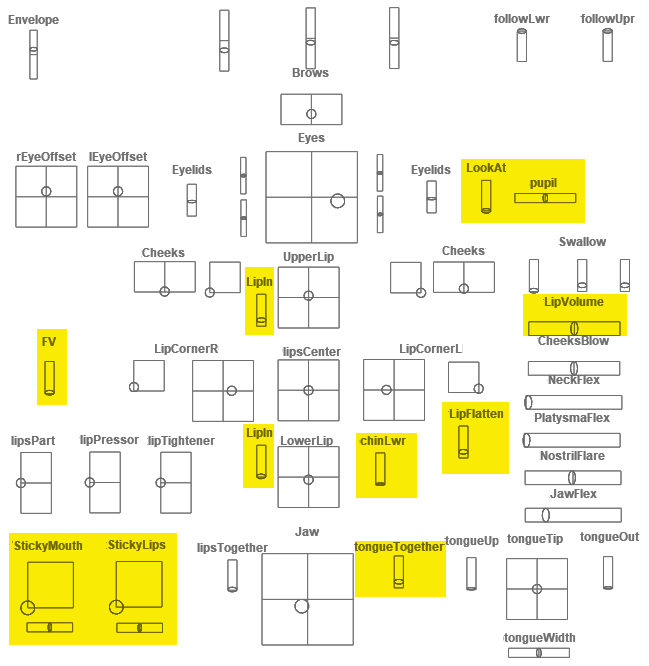
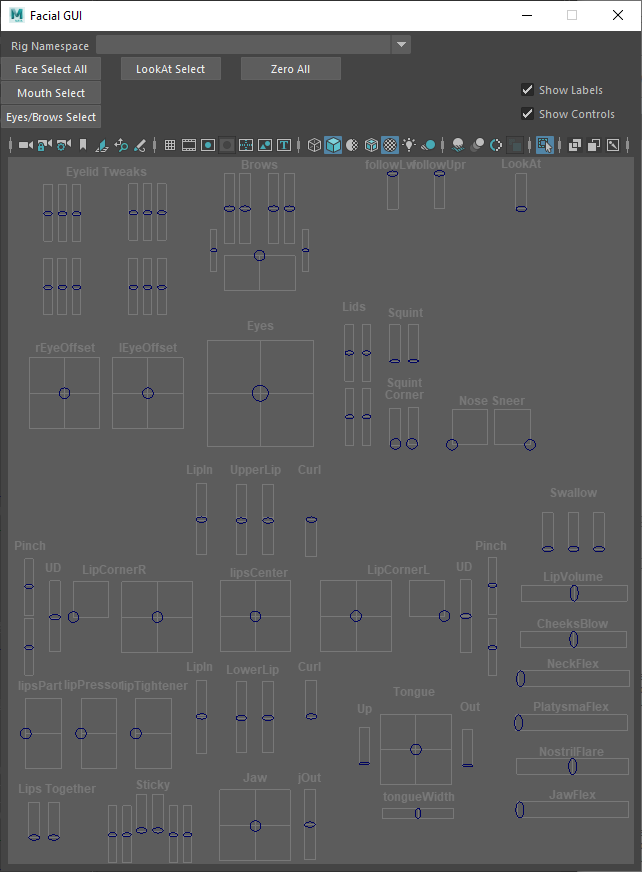
Initially I came on board as a contractor. One of my first tasks was revising and augmenting a facial rig that had been created in cooperation with Digic Studios. All the main cinematic characters were using this style rig at the time. I added new blend shapes and controls, split existing shapes for added control over certain regions, made influence coverage adjustments of existing shapes, cleaned up material attributes governing wrinkle triggering, optimized blend shape deltas, and added a scripted floating picker ui that fulfilled animation requests. With the help of the lead character artist, I started building upon the Digic style rig to create a generic male and female facial rig. I fixed or adjusted rig logic, uv’s, blend shapes, and wrinkle limitations that were identified during reviews.
Old Controls
New Control Layout and GUI
Snappers Facial Rig
The well-known actors we were going to scan were going to require external help to hit the quality mark demanded by top management. Covid really affected the ability to find internal or external people with the speed, availability, cost, and know how to create an animation and mocap friendly high fidelity face rig. I had worked with Snappers before on Mafia and thought we should evaluate their offerings for this project. This new rig was definitely more complex in all respects than the rigs I used on Mafia 3. More controls, more blend shapes, plug-in requirements (black boxed rig logic), more diffuse and normal wrinkle textures, more Maya expressions, and layered Maya deformations.
I was involved in the technical Snappers rig evaluations. I managed the feedback for the human face rigs as they came in, asset intake, integration of Maya and texture files, body rig integration, and Unreal integration and asset setup. I created tools to help check the rig against scan pose data and assist in automating intake and integration as much as possible.
Snappers rig modifications
I handled blend shape additions for facial hair, scalp hair, eyebrows, clothing, etc. Different wrapping and skinning methods are employed depending on whether the deformed geometry can stretch or not. Hair cards for eyelashes and facial hair look better deforming rigidly. A membrane like the eye wet layer might stretch within its rigidly bound borders, so there are many special case options my wrapping workflows had to cover. I integrated the head assets with the body, combining the skeleton and rigs, adjusting the head related geometry assets pre-deformer from the origin to rest atop the body. I did skin weight adjustments/optimizations, added wrinkle and blends shape custom attribute triggering tracks to the root bone( so we could bypass exporting deforming geometry through fbx), implemented eye aim constraint fixes, and inserted rig logic adjustments into the face rig when necessary.
Metahuman as a character generator
Metahuman is a great source for very high quality digital humans but it is still under development. For secondary and background characters we started using Unreal Metahuman as a character creator and as a source for assets to construct our Digic Style Rig from. I am currently automating this process as much as possible. The Metahuman Maya rig is automatically posed to extract 80 base blend shapes from which 120 are developed through splitting, combining, masking, ect.. Some additional shapes are being procedurally created or transferred from previous blend shape deltas (Sticky lips, tweakers for eyebrows and eyelids, ect. ).
Metahuman LOD 2,3,5,7 topology was used as our LOD 0,1,2,3